From Chapter 2 …
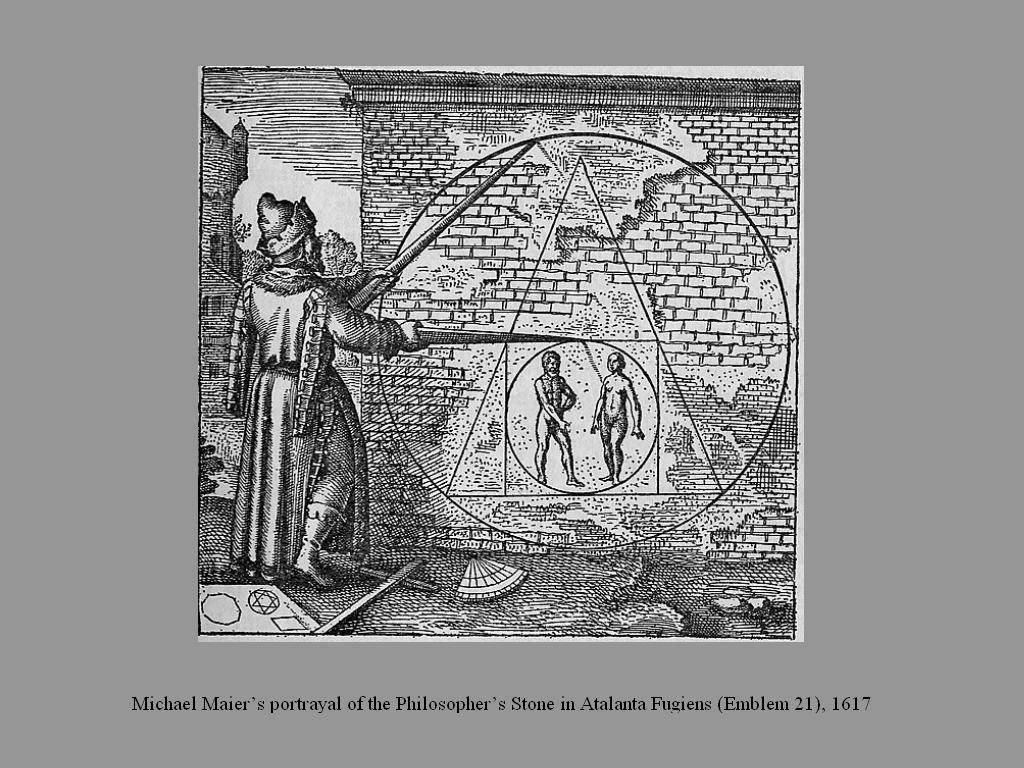
In Mysterium Coniunctionis, Jung…portrays the alchemical opus as a series of conjunctions culminating in the realization of the Philosopher’s Stone. The final stage “of the opus alchymicum was indubitably the production of the lapis.” The Stone, says Jung, is a “symbolic prefiguration of the [S]elf,” and to prepare for the ultimate Self-consummation, one must realize oneself as “‘living stone’,” a “‘stone that hath spirit’.” We also learn from Jung that the Philosopher’s Stone is linked to the unus mundus. Accordingly, “Dorn sees the… highest degree of conjunction in a union or relationship of the adept…with the unus mundus.” Indeed, the unus mundus (the “potential matter of the first day of creation”) corresponds to the “prima materia,” which, elsewhere, Jung correlates with the lapis. Linking the uroboric Stone to the unus mundus in this way confirms the Stone’s intimate relationship to death, for we have established that the unus mundus is the “realm of the dead.” Although Jung himself does not explicitly make this connection as far as I know, his colleague and collaborator Marie-Louise von Franz does just that in her book, Number and Time, as we discussed in the first section of this chapter. Thus, the creation of the subtle body ultimately entails a backward passage into the underworld sphere of the uroboros-qua-Philosopher’s Stone. The fashioning of this infinite body is the key to the ego-death and rebirth that lies at the heart of alchemy.